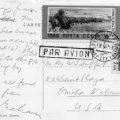
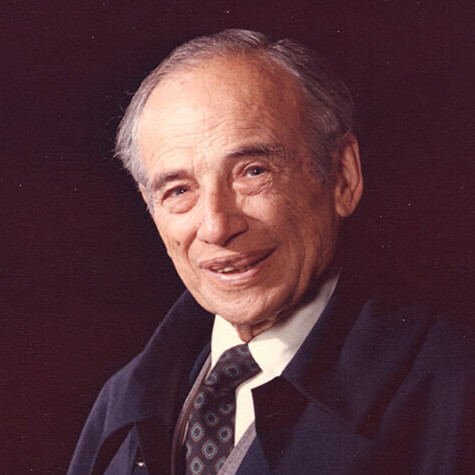
Benjamin Graham and his son Buz embarked on what was meant to be a bonding ski trip—and instead faced some of the loneliest moments of their lives.
The Spill
Sixteen-year-old Buz Graham had already endured the tough blow of parental separation. Ben no longer lived with Buz and his mom, Estey, in their Beverly Hills home. It didn’t help that Estey was openly angry at his dad. Still, warm-hearted, easy-going Buz set out to enjoy this special father-son time. When his dad needed a rest, Buz grabbed the chance to take a steep solo run—a run that culminated in a spectacular fall.

The Mammoth Ski Patrol pictured in 1968, courtesy of the Mammoth Ski Patrol Alumni Association Facebook page. My thanks to the ski patrolmen who helped Buz and Ben.
The ski patrol conveyed Buz down the hill, determined that he’d shattered his leg, and rushed him off to a hospital. (In 1962, the nearest hospital was located in Bridgeport, California, forty-eight miles north of Mammoth Lakes.) Buz found himself stranded in a quiet room with a hefty plaster cast and no familiar faces in sight. Back in Los Angeles, life at Beverly Hills High went on without him—schoolmates included sharp, funny kids like Rob Reiner and Albert Brooks—but Buz lay immobilized, far from home, facing a long recovery. Nurses telephoned the Mammoth Mountain Inn, where Buz and Ben had checked into a double room, but no one could locate Buz’s father. Message after urgent message went unanswered. At the inn, the concierge no doubt did everything he could—calling the room, knocking, slipping notes under the door—all without success.
Ben Graham Is Missing
Where was Benjamin Graham? Buz waited as night fell, his thoughts darkening. Had his dad taken a wrong turn off a groomed trail and fallen into a tree well, unable to free himself? Or had his father abandoned him? Had the promise of special time together meant less than Buz had believed?
At last, an orderly appeared at the doorway, pushing a chair toward the bed. The figure in it appeared shadowy in the dim light. As the chair moved closer, Buz saw who it was. Seated in the wheelchair was none other than his father—Benjamin Graham.
A Stark Encounter with Mortality

The human heart with a healthy coronary artery above, and a partially occluded artery below. A complete blockage shuts off the blood and oxygen supply to a portion of the heart muscle, resulting in a “myocardial infarction”—or heart attack. Diagram courtesy of OpenStax, licensed under CC BY. Source: OpenStax Anatomy and Physiology, available at https://openstax.org/details/books/anatomy-and-physiology, via AnatomyTOOL.org.
Ben had suffered his own painful calamity at nearly the same time Buz broke his leg. Sixty-seven years old, Ben knew what chest pain and shortness of breath meant. One of the blood vessels that brings oxygenated blood to the heart muscle was blocked. Ben was having a heart attack!
He needed help, and his son Buz was not by his side. Did Ben ski down to the base of the mountain and make his way to the first-aid station? Or did the ski patrol carry him down in a toboggan? My grandfather never told me, nor did he write about this frightening episode. What he surely did know was that in the mid-twentieth century, nearly a quarter of those who suffered a coronary died before reaching the hospital. Benjamin Graham faced the very real prospect of dying in an ambulance on the windy back roads of Mono County.
Would he ever see his loved ones—Buz, his three grown daughters (including my mother, Marjorie), his grandchildren—again? Would he even be able to reach Buz, to say hello and possibly goodbye? Cell phones lay decades in the future. Clearly, he never did reach Buz by telephone. The doctors monopolized Ben as they stabilized him in the emergency room. Eventually he was transferred to a room in another wing of the hospital. In the strain of the moment, Ben must have worried about his teenaged son, left alone at the inn (as far as Ben knew) with no idea where his father had gone and no explanation for his absence.

Benjamin Graham and his son Benjamin “Buz” Graham Jr;, circa 1962.
Together At Last
Then came a small miracle. A perceptive member of the hospital staff realized that the two recently admitted Grahams were related and made a brief visit possible. The reunion must have offered some comfort and, at the same time, been deeply unsettling: Ben confronted the sight of his son’s severe injury, while Buz learned that his father had suffered a cardiac emergency.
The Letter My Mother Saved for Me
This story resurfaced vividly for me not long ago when I came across a letter Ben wrote to my mother, Marjorie—his eldest daughter—during his convalescence from that same heart attack. I don’t know how much time has passed since both Grahams were discharged from the hospital. Dated February 12, 1962, the letter offers a brief progress report on Buz while also responding, no doubt, to my mother’s mention that my parents and I had enjoyed horseback-riding on Rotten Row in Hyde Park. I was eleven years old then, and we were spending that year in London during my father’s sabbatical. Ben wrote my mother:

…cast for quite a while.”
“It was nice to imagine all of you on horseback. But take care—it’s more dangerous than skiing. Buz gets around all right, drives the car with one leg, but won’t shed his big cast for quite a while.”
Shaken and Raw
Orthopedic doctors in the early 1960s tended to be more cautious than they are today, leaving casts on longer and delaying weight-bearing. Ben’s cardiologist took a similarly conservative approach, ordering him to remain on complete bed rest for weeks. No exertion, no work of any kind—not even the mental strain of revising the books that had made him famous. Ben himself responded conservatively to his brush with death by moving back into the family home in Beverly Hills with his wife Estey and son Buz. In the letter, Ben refers to “Estey and I” and to “we” as if they were still a solid couple—when, in fact, he had left the marriage four years earlier. I understand how shaken and emotionally raw Ben must have felt after his sudden awareness of life’s fragility, and I see how he must have taken comfort in having his family close around him.
Buried Wisdom
In the weeks following his coronary on the slopes—at a time when sudden cardiac events cut down many of Ben’s contemporaries in midlife—Ben opened his heart and mind to my mother. Yet what compels me to share his letter goes deeper than its historical moment or its intimate account of my grandfather’s life. Buried in his warm passages is a piece of timeless wisdom that appears nowhere in his books. It is wisdom not about investing, but about how to live a happy and meaningful life.
Ben begins the letter with an affectionate greeting, to my mother and also to my older sister Cathy and me. (He called me Charlo.)

“Dearest Marj.,
Happy Valentine’s Day—also to Cathy and Charlo! Your long letter of January 30 deserves an equal reply, but both Estey and I are rather swamped nowadays. I’m working a bit desperately to catch up on our schedule for Security Analysis to insure publication of the revision this year. It is an almost endless task—what with the re-revisions—but I think I see daylight. [The 4th edition, published on schedule in 1962, ultimately ran 778 pages; no wonder it seemed endless.] My hours are still limited by doctors’ orders, so I do a great deal of reading besides. Your various gift books have come in very handy.”
Why Ben Didn’t Follow Doctors’ Orders
I take this paragraph to mean that Ben quietly defied his doctor’s orders to rest, choosing instead to work—”a bit desperately”—on revising Security Analysis. Why would he take such a risk? Because he didn’t know how much time he had left and felt a profound responsibility to pass on his hard-won knowledge of sound investing. Ben was keenly aware that hundreds of thousands of readers relied on his work for guidance, including those becoming credentialed in the then-new profession of financial analyst—a field that emerged directly from his development of security analysis—as well as these financial analysts’ clients. All stood to benefit from a corrected and updated edition that could help them secure a more stable financial future. Without a revised Security Analysis, many might have continued to rely on outdated material from earlier editions, potentially exposing themselves to avoidable and harmful consequences.
How Benjamin Graham Gave Generously to Others
In my last blog post, I explored Warren Buffett’s generosity; in this reflection, I turn to that of Mr. Buffett’s mentor, Ben Graham. Ben’s generosity lay in his distinctive way of giving to others—including future generations. He chose not only to write books and articles that clarified his investment philosophy, but also to keep revising those works long after he closed his Wall Street office in 1956 and retired from investing. He gave just as freely of his ideas in the classroom: teaching Advanced Security Analysis at Columbia Business School and continuing to teach, without pay, at UCLA well into his sixties. Keeping his books current amid changing market conditions, together with his commitment to teaching, became Ben’s way of serving others—a form of service that gave his life meaning. One wonders whether he had any inkling that Security Analysis would still be read and valued nearly ninety years after he and David Dodd first published it in 1939.
Serving Others Brings Happiness
A growing body of research, including a Harvard study, shows that giving to others fosters happiness and well-being. Ben seemed determined not to die before sharing everything he could with his readers. Even knowing that working “desperately” while recovering from a heart attack carried serious risk, he pressed on with revisions because the work—aimed squarely at helping others—gave him a profound sense of purpose and fulfillment. He may well have sensed that this source of well-being supported his recovery.
Finding Our Own Way to Give
Ben’s example inspires us to find our own ways of serving and giving to others—ways that will likely be completely different than Benjamin Graham’s and Warren Buffett’s, but that also bring meaning, purpose, and happiness to our lives.
Back in his letter to my mother, Ben leaves work behind and goes on to share some thoughts about the books he’s been reading while he’s at rest, following doctors’ orders. Scanning the letter pictured below, we see that his was not your typical reading list. Readers in 1962 chose to read books such as Harper Lee’s Pulitzer Prize–winning To Kill a Mockingbird, Barbara Tuchman’s The Guns of August, and Joseph Heller’s Catch 22. Not Benjamin Graham. If you read an earlier blog post, Benjamin Graham, Teenaged Farm Hand #12, you know that Ben developed a passion for classical literature at a young age. I shake my head in wonderment that the summer Ben turned sixteen and worked fourteen hour days as a farmhand, he spent his rare leisure moments reading the Anabasis, a classic Greek text written in 401 B.C.E. by a soldier named Xenophon. The farm where he lived had no electricity, so he read the book by kerosene lamp—in Greek—with his Greek Grammar at hand. Oh Grandpa, what an amazing boy you were!”
Ben Graham’s Idea of Fun

Benjamin Graham’s Valentine’s Day letter to his eldest daughter Marjorie Janis, dated February 12, 1962, in which he names a stunning variety of illustrious authors as well as literary and Biblical characters.
Back to Ben, age sixty-seven, writing to my mother about his current literary pursuits. I can’t resist beaming as I reel off the dazzling kaleidoscope of authors and characters he names: Milton, Goethe, Helen of Troy, Faust, Samson Agonistes, the Apostle Paul, Euripides, “Thais” of Menander, Freud, Keats, Balboa, Cortez, Santayana, and Callimachus. He also mentions three Biblical figures: Jacob, Rebecca, and Rachel.

Portrait of Filip Callimachus, Italian writer, from a book by Paolo Giovio, 1483 – 1552, courtesy of Emory University, Pitts Theology Library.
“Do you remember the coincidence of your writing me about the poem of Callimachus just when I was disagree[ing] with everybody about the meaning of ‘tetrapxalai’?”
You and I might not pick up a book by Callimachus for sheer pleasure, but my grandfather did. Callimachus was an influential Greek poet and librarian who lived in Alexandria in the 3rd century B.C.E. Not even twenty-first-century AI can unearth a Greek word resembling “tetrapxalai.”
Delighting in the Life of the Mind
Ben’s ragtag assemblage would make a scintillating dinner party, for those inclined to imagine such things. Ben did imagine—not the party, but the interplay of their famous lines, clashing ideas, literary errors, and Freudian slips, all of which he held in his prodigious memory, as if the writers were ready to rise up and carry on sparkling conversations in his head.
“It’s fun writing about such intellectual matters.”
I revel in the deadpan line, which captures Ben’s gift for understatement. Scholarly pursuits were more than merely fun for him—they were a form of joyful, immersive play. Ben Graham gave his remarkable intellect free rein to carry him back in time, where he could keep company with great poets and match his wits with theirs. Poring over books by authors he considered the greatest who ever lived, memorizing their lines, diving deep into meaning and comparative analysis—this life of the mind had long been Ben’s way of giving generously to himself, whether he needed respite from farm labor or from the cerebral labor of Wall Street.
He often read demanding authors in their native languages—Greek, Latin, German, French, Spanish, Portuguese, and, of course, English. In his letter to my mother, Ben Graham shows how he balanced his drive to give to others—through revisions to his iconic Security Analysis—with his equally strong impulse to give to himself, through reading and sustained engagement with great books.
Seeking Balance
“As you grow older, you will discover that you have two hands, one for helping yourself, the other for helping others.” – Maya Angelou
After I published blog post #29, which explored Warren Buffett’s and Ben Graham’s generous ways of giving to others, a question lingered in my mind: How do we balance serving others with taking good care of ourselves? You wouldn’t give away every penny of your nest egg to charity; a sensible person keeps enough to support their own family. So too, you wouldn’t want to exhaust every ounce of your time and energy giving to others. How, then, do we find the right balance?
Compassion for Ourselves
We cannot truly give to others without also extending compassion to ourselves. When we respond with kindness to our own struggles, we replenish the reservoir of kindness we need to meet the struggles of others. Just as we encourage those around us, we need to encourage ourselves. And just as we view the flaws and suffering of others with patience and understanding, we must learn to regard our own flaws and suffering with the same.
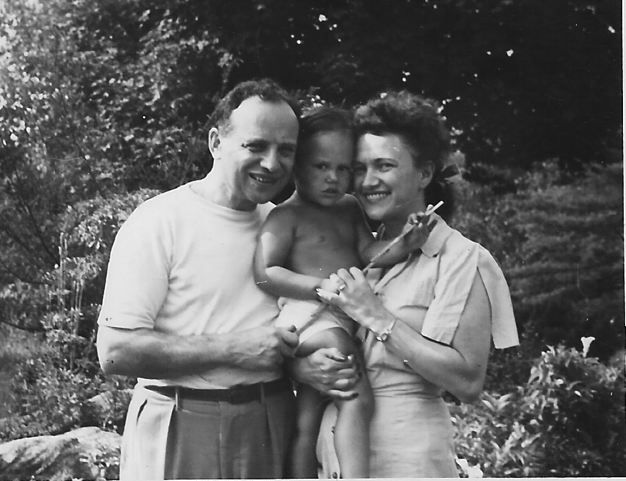
Benjamin and Estelle Graham with their son Buz in 1947, taken in the town of Mt. Kisko, in Westchester County, New York State.
A close look at our own lives, or at the lives of admired figures such as Wall Street legend Ben Graham, reveals a universal truth: All human beings are imperfect. We make mistakes, endure setbacks, suffer tragedies, and experience vulnerability. While recovering from a health scare that understandably left him feeling vulnerable, Ben also made choices that caused pain to others. I can appreciate how difficult it must have been for Estey and Buz to care for him in their home, welcoming him as though he had returned to the family, only to see him leave once more once he had recovered. From such moments, we can learn from our missteps, make amends, choose differently in the future, and—above all—regard ourselves and others through the gentle lens of compassion.
Becoming Happier
We can get through tough times the way Ben got through the aftermath of his heart attack—by striking a balance between giving to others and giving to ourselves. For Ben, this meant granting himself permission to indulge in his own scholarly “fun.” Each of us can chart our own path toward self-giving by embracing self-compassion and prioritizing activities that genuinely nourish us. This may feel awkward and selfish at first, especially for those of us who believe that a strict work ethic and harsh self-criticism fuel growth. In fact, the opposite is often true. Treating ourselves with kindness, understanding, and acceptance can help us heal, deepen our capacity for love, strengthen our relationships, and ultimately make us happier.
A Message from Grandpa Ben to Me
Six decades after Ben typed this letter, I’m thrilled to find this message that my grandfather asked my mother to pass on to me.

Grandpa Ben’s message to Charlo [the author of this blog], age eleven, who was then spending her sixth grade year in London with her parents.
“Tell Charlo [me] that I was once a part of the mob in the burial scene of Julius Caesar at her age. We rehearsed so much that I learned Mark Anthony’s oration by heart just by listening to a boy named Peyser say it over and over. It does beat the Star Spang. Ban. [Star Spangled Banner].
“That’s all for now. Glad to hear that Cathy [my older sister] is getting on well. We send all our loves to all of you, Dad.”
As a sixth grader at the American School in London, I was lucky to have a teacher who taught me to love both Shakespeare and writing. I will always remember a creative assignment she gave us: to open a story with the line, “It was a dark and stormy night.” I was too young to know that the line had already become infamous as a model of bad storytelling and would soon be immortalized, in 1965, as Snoopy’s opening sentence for his doomed novels.
My mother had written to Ben that my class staged a theater-in-the-round production of Julius Caesar—no costumes, no scenery, just kids speaking Shakespeare’s stirring language. Like Ben, I memorized every speech delivered by the play’s powerful characters. I can still recite Mark Antony’s masterful appeal to pathos: “If you have tears, prepare to shed them now.” I feel a link with my grandfather, knowing we both tasted Shakespeare in our youth.
I’m moved that my grandfather found a way to connect with me in London from his Beverly Hills berth, six thousand miles away—without a cell phone, FaceTime, text messaging, Instagram, or WhatsApp. All he had was a blue aerogram, a typewriter, and the power of his words to bridge the distance between us. To let a grandchild who lives far away know that he’s thinking of her—that’s a feat many grandparents I know still strive to accomplish today.
Father-Daughter-Granddaughter Love
I don’t remember how I felt when I first read his words at age eleven, but reading them now, my heart melts. I feel how deeply he loved my mother—his eldest daughter—and how fiercely she loved her father. She didn’t want to lose him, not when she was only forty-one and he was sixty-seven, still vigorous, still a skier, not yet an old man. I sense that she poured every ounce of her love for him into her last letter, and that he, in turn, sent his love back to her. I see how she did what she could to support his recovery from afar, writing to him and sending books—books that proved to be exactly what he needed to stay intellectually engaged, happy, and alive.
Now I allow myself to be vulnerable with readers around the globe and admit that tears well in my eyes. Alongside my mother and sister, I feel that, in case he didn’t live to see us again, he truly wanted to send his love to me.