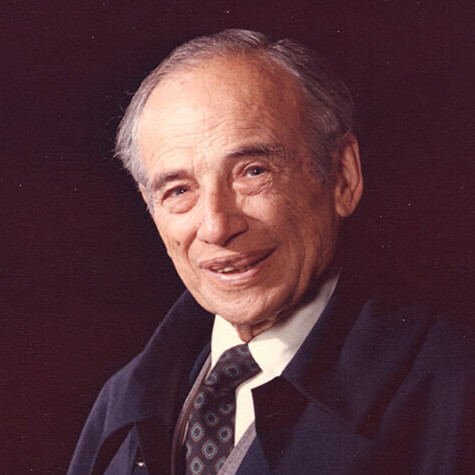
In a cruel twist of timing, my grandfather Benjamin Graham moved into the grandest residence of his life just before the stock market crash of October 1929. He had no inkling that his opulent duplex—spanning two sumptuous upper floors of the newly completed Beresford Apartments—would stand as a gilded harbinger of the ruin to come.
When Ben, his wife Hazel, and their three children moved in, the apartment’s beautiful terrace immediately enchanted the kids. My mother, Marjorie, then nine years old and the eldest of the three, loved its breathtaking view of Central Park. Turning south, she could gaze at the distant Midtown skyline. She and her younger siblings spent hours romping in that elevated play yard, spacious enough for outdoor toys and their beloved pet rabbit.
The Berlin Wall on Central Park West
Just as Ben didn’t expect economic calamity, my mother didn’t expect her little rabbit to make big trouble. In his autobiography, Benjamin Graham: The Memoirs of the Dean of Wall Street, Ben recounts the first crisis in their new abode:
“To our chagrin we discovered one day, soon after they moved in, that [our neighbors] the Strausses had erected a cast-iron wall between our terraces, which shut off our view to the south and was very unattractive as well…We took it as…an encroachment on our inviolable privileges. (I laugh now to think about the things that were important to me then.)”

Snow on a modern-day Beresford terrace with a wintry view of Central Park and beyond.
The matter loomed important enough that Ben and Hazel appointed an attorney from “an eminent firm,” who went on to engage in “heavy negotiations” with their adversarial neighbors.
“Mr. Strauss claimed that we were keeping guinea pigs on our terrace, and he didn’t want them to invade his domain. We retorted that the guinea pigs consisted of one small rabbit; he insisted on his right to privacy; and so on. Finally, a compromise of the great dispute was reached. The cast-iron wall was replaced by plants.”
I can’t help but smile at the conflict that erupted between these two privileged families, dwelling in lofty lodgings at one of the most exclusive addresses on Central Park West. Years later, Ben and the Strausses smiled, too, when they found themselves sharing a table at a charitable dinner. Mrs. Strauss went on to admit that her son Nathan often talked about Ben’s eldest daughter—my mother, Marjorie. Mrs. Strauss reported that Nathan “was too bashful” to ask Marjorie to school dances because “she got A’s in all her subjects.” Indeed, my mother became the valedictorian of her class at the Lincoln School at Columbia University’s Teachers College. I admire how my grandfather never held grudges, but instead became more affable, appreciative, and respectful—both toward his children and others—as age tempered him with wisdom.
Black Thursday and Tuesday
If only the “Berlin Wall episode,” as Ben calls it, had been the worst of it. On October 1, 1929, Ben and his family moved into their lavish new residence at the Beresford. Weeks later, on October 24—Black Thursday—the stock market suffered a catastrophic crash, with nearly thirteen million shares traded in a single day.

A New York City newspaper captures the shock of Black Thursday, headlining the Stock Market Crash amid the swirl of daily news.
The sudden downturn was driven by multiple factors. Throughout the 1920s, share prices had climbed to unprecedented heights, creating an unsustainable market bubble. At the same time, the widespread use of margin buying—where investors paid only 10 percent of a stock’s price and borrowed the rest—meant that the market was heavily leveraged. When prices began to fall, brokers issued margin calls, forcing investors to sell their stocks to cover losses. This triggered a wave of panic selling that drove prices down even further, fueling a vicious cycle of fear and market collapse.
The downward spiral only deepened in the days that followed, culminating in the infamous Black Tuesday on October 29, when panicked investors traded a staggering sixteen million shares. This frenzied sell-off marked the end of the Roaring Twenties and ushered in the global Great Depression.

A solemn crowd gathers on Wall Street outside the Stock Exchange after the Crash, October 29, 1929. From an SSA poster.
Benjamin Graham, “Financial Genius”?
Ben strikes an unexpectedly upbeat tone when recounting how he and his fund, the Benjamin Graham Joint Account, actually benefited from the market downturn that preceded the Crash.
“In the tremendous declines after September 1929, we covered a large number of our short positions, making a nice profit. But in most cases we did not sell out the preferreds since their prices seemed too low. We closed the year with a loss of exactly 20 percent compared to a much larger loss for the DJIA. Practically everyone was pleased with the account’s results for the year; in fact, I heard myself referred to more than once as a ‘financial genius’ for not having lost more.”
I understand that my grandfather often chose preferred stock over common stock, and that shorting allows an investor to make gains when a stock price falls. I defer to my hedge fund-savvy readers to elucidate how Ben made that “nice profit” by “covering” his short positions.
Between September 3 and November 13, 1929, the Dow Jones Industrial Average plummeted from 381.2 to 199—a catastrophic decline of 47.8 percent. By comparison, Ben’s 20 percent loss seems relatively mild. He had initially managed to shield himself and his investors from calamity, but the protection was short-lived. In his Memoirs, he candidly admits he was “100 percent wrong” to have held onto all the stocks he had acquired throughout the 1920s, both for himself and for the “participants,” as he calls them, in the Benjamin Graham Joint Account.
A Personal and Professional Low Point
Ben sums up his financial losses with honest humility.
“Despite its encouraging beginning, the year 1930 was prove by far the worst in the thirty-three-year history of my fund management…Our loss for 1930 was a staggering 50 ½ %; that for 1931 was 16 percent; but for 1932 was only 3 percent—a comparative triumph. The cumulative losses for 1929 through 1932—before the tide turned—were thus 70 percent of our proud 2 ½ million capital of January 1929.”
Ben’s total capital in early 1929—two and a half million dollars—would be worth roughly forty-four million today. But numbers alone can’t capture what an extraordinary sum that was for a thirty-something immigrant who had started with nothing. Nor do they reflect the devastation he must have felt as he watched, day by day, 70 percent of the Benjamin Graham Joint Account’s value vanish. The losses continued to mount, in part because Ben and his partner, Jerry Newman, chose to prioritize their remaining investors over their own financial security.
“We had stubbornly continued to make quarterly distributions of 1 ¼ percent—charged to Jerry and my capital—and these cut the amount remaining at the end of 1932 to only 22 percent of the original figure.”
Ben Graham and Jerry Newman paid out these distributions—a total of five percent per year—because they felt their investors needed the money. Unlike the wealthy clientele typical of today’s hedge funds, Ben’s Joint Account investors were ordinary people—friends, relatives, and acquaintances who had entrusted their savings to Ben. Many of them pulled out their money after the Crash, often at a steep loss.
“One of these was Bob Marony, who explained most apologetically that he had to have his funds to meet obligations elsewhere. [A friend] told me then that Bob—the imperturbable fighting Irishman—had burst into tears after disclosing the near-total loss of his fortune.”
Ben also suffered severe losses. He had obligations to meet, too. Wasn’t he spending lavishly just to live at the Beresford?
The Lease That Wasn’t the Least of his Worries

Benjamin Graham’s Beresford Lease Agreement for Apartments 19 and 20-E on the 19th and 20th Floors, for 10 years commencing October 1st 1929.
I was thrilled to find this lease agreement among the papers my mother saved from her father, Benjamin Graham, treasures she entrusted to me before she died in 2011. This ten-year lease reveals exactly what my grandfather paid annually for that palatial apartment at the Beresford: $11,000 a year, equivalent to about $185,000 today, or roughly $15,400 per month. And that was just the beginning. In his Memoirs, Ben admitted that “the whole place seemed too large” and that there were “endless decisions to make about the decorations.” It seems they spent a small fortune furnishing their grand new home.
A Troupe of Servants
What about household staff? Ben recalls in his Memoirs that his friend Dave Sarnoff, “who had risen from Russian immigrant to head of the huge RCA [Radio Corporation of America] company” had a room in his home with a barber’s chair where his valet gave him daily shaves. Although Ben refers to Mr. Sarnoff’s “new quarters on Fifth Avenue,” my research reveals that Ben’s friends, David and Lisette Sarnoff, resided at the 1913 Marquand at 11 East 68th Street.
Perhaps Ben imagined that he, too, might enjoy the indulgence of a daily shave from a valet. Yet his uncharacteristically irritable account of the Grahams’ domestic staff at the Beresford makes it clear he had little taste of being waited on hand and foot.
“We started off with a troupe of servants, including a combined butler and personal valet for me…It was one of my valet’s duties to give me a daily massage, which I soon came to regard as a nuisance and a waste of time. I insisted that he be let go. That was the first and last time that I had a full-time manservant.”
Ben doesn’t say whether the family let go of other domestic staff, but given his financial straits, I’m certain they did. According to my mother, they kept their full-time governess for some years, a formidable German woman whom they called “Fraulein.” Setting aside Ben’s servants, who likely earned the modest wages typical of the era, I turn to Ben’s own account of how he coped in the aftermath of the Crash.
Tightening His Belt
“Clearly my family needed to cut down on its tremendous living expenses, especially since under the compensation contract the account paid me no salary but only a percentage of earnings for running the business.”
Here he reveals his lamentable situation. He managed the Benjamin Graham Joint Account, a hedge fund that was currently hemorrhaging value. While he earned handsomely in good times, now that the fund was losing money, he earned nothing. He had a wife, three children, and a widowed mother to support. What could he do?
“The chief problem was to get rid of that old man-of-the-mountain lease at the Beresford. By a stroke of luck we were able to sublet the apartment for most of a year (at nearly the rent we paid for it unfurnished) to Mrs. Marcus of Nieman-Marcus, the Dallas department store.”

The El Dorado at 300 Central Park West. Wurts Bros. photographed the newly completed building in 1932. Photo from the collection of the Museum of the City of New York.
I find it fascinating that nearly a century later, Neiman Marcus remains a household name, with dozens of stores across the U.S. and a strong online presence. I wonder if it was Carrie Marcus Neiman, who divorced her husband in 1928 and often traveled to New York to buy fashions for the Texas store, who allowed Ben, Hazel, and the children to bid farewell to the Beresford. The Graham family relocated to the “much cheaper but still quite impressive” El Dorado at 91st Street and Central Park West.
I’m amazed that Ben and Hazel could afford to rent an apartment in this fashionable new building at 300 Central Park West. Ben refers to Charles Goodman as both a “successful builder of subways” and a “friend,” so it’s likely they received a favorable deal.
Even so, Ben admits to feeling profoundly low. He reflects on the suicide of a man he knew—someone who, after the Crash, took his own life by inhaling exhaust from a running car.
Defeat and Near-Despair
“I can sympathize with the desperation of my old friend, and almost with his tragic end, because to some degree I went through comparable dismay and apprehension for more than three years. It is true that I wasn’t ruined and that at the lowest point I still had means which would have seemed quite large to me only ten years before.”
The Joint Account still held 22 percent of its peak value of $2.5 million—Ben’s share of which was apparently enough to support life at the El Dorado.
“But wealth and poverty are relative terms—a poor man in New York would be a rich man in Calcutta, and practically everyone who has lost four-fifths of his wealth considers he has suffered a disaster no matter how much he has left.”
I wholeheartedly echo Ben’s words of wisdom. I also reflect that his youth had been far more difficult than what he faced after the Crash. Growing up without a father and with a mother who didn’t work, Ben experienced a level of hardship and financial insecurity that far exceeded the three grim years of “dismay and apprehension” from 1930 to 1932. Yet that was small comfort now.
“The chief burden on my mind was not so much the actual shrinkage of my fortune as the lengthy attrition, the repeated disappointments after the tide had seemed to turn, the ultimate uncertainty about whether the Depression and the losses would ever come to an end. Add this to the realization that I was responsible for the fortunes of many relatives and friends, that they were as apprehensive and distraught as I myself, and one may understand better the feeling of defeat and near-despair that overmastered me towards the end.”
The Emotional Cost of Falling Short
Ben’s words move me deeply. When someone suffers a professional setback, whether minor or major, it often stirs up old, internalized voices of self-doubt. In Benjamin Graham’s case, those voices echoed the harsh criticisms he endured throughout his boyhood, particularly from his family. His mother had not wanted a third son, and when Ben was just five, she told him so—confessing that her disappointment at not having a daughter had triggered an impulse to throw him out the window at birth. She remained, by his account, an emotionally distant single mother who comforted him only once. He certainly never received the message that he was lovable and inherently good. His brothers, meanwhile, bullied and belittled him, leaving scars that success alone could not erase.
No wonder he’d felt such a powerful need to prove his worth—to show those who had once undervalued him just how capable and intelligent he truly was. And he had done exactly that. From humble beginnings as a scholarship student at Columbia, he rose to become a Wall Street whiz kid—one who didn’t just succeed for himself, but generously shared that success with others. He had derived deep satisfaction from becoming his family’s top earner, who bailed his older brothers out of financial difficulties, supported his mother, became an activist shareholder, and helped numerous participants in his fund become financially secure. But now he had let down those who depended on him. He could only bring them relief by restoring the Joint Account to robust health—but he was powerless to do so. Any hope of rebuilding their financial stability rested not in his own hands, but in forces beyond his control: Wall Street and the U.S. economy.
Today, we know the U.S. economy did recover from the Great Depression, thanks in part to President Roosevelt’s New Deal: measures to provide relief to America and its citizens.

President Roosevelt visits a farmer who is receiving a drought relief grant. Mandan, North Dakota. Photo by Arthur Rothstein. Courtesy of Library of Congress.
President Franklyn Delano Roosevelt had grown up in an affluent family, arrogant and sheltered, until his personal experience of polio and disability opened his heart to compassion for the suffering of others. It pained him to see “millions of families trying to live on incomes so meager that the pall of family disaster hangs over them day by day.” This poignant photograph serves as a stark reminder of the devastating poverty and hardships that some American families endured.

Farmer and sons walking in the face of a dust storm. Cimarron County, Oklahoma. Photo by Arthur Rothstein. Courtesy of Library of Congress.
To lighten their burden, President Roosevelt sought to “guarantee a decent economic standard of living in life for all of our people.” In addition, the surge in demand brought on by World War II helped the economy rebound. But for Ben and all those who lived through those harrowing years, there was no assurance of an economic upturn.
Unanswered Questions
What if the Great Depression never loosened its grip on the American economy? That troubling question weighed heavily on Ben throughout those lean, uncertain years.
Ben Graham amassed far more wealth than he could have imagined as a boy. But the losses he suffered after the 1929 crash cut deeper than anything he had faced before. Why? Because he felt responsible. His decision to hold onto stocks prior to the market collapse would haunt him for years. Could he rebuild—not just his fortune, but his confidence? Stay tuned for my next post.