Benjamin Graham knew how it felt to watch money disappear. As a boy of eight, he lost his father and his family’s financial security. With his brothers and widowed mother, he grew up broke. As a young father of two, he endured the sharp depression of 1921. As an ambitious fund manager, he lost 70% of his Joint Account after the Crash of 1929.
What does a brilliant investor do after living through financial devastation? He turns his mind to stopping it from happening again. Ben Graham did exactly that, developing a bold idea he called the “Commodity Reserve Currency Plan.”
Ben devotes an entire chapter of his autobiography, Benjamin Graham: The Memoirs of the Dean of Wall Street, to this plan—a chapter in which he offers engaging commentary on the development of his idea. He opens with an astonishing statement.
“If my name has any chance of being remembered by future generations—assuming there will be future generations—it will be as the inventor of the Commodity Reserve Currency Plan.”

Here’s a copy of the 1st Edition of The Intelligent Investor by Benjamin Graham, published in 1949. Photograph courtesy of VintageNew&Rare, who list the book on eBay for $20,000.00. Benjamin Graham’s principles of value investing, as elucidated in this book, have made him famous.
I’m gobsmacked. Apparently, Ben had no idea that, seventy-five years after penning The Intelligent Investor, he’d still be remembered for this iconic book, which explicates his inventions of security analysis and value investing. No doubt he’d be happy to learn that HarperCollins published a third edition of the book in 2024 with chapter-by-chapter analysis by Jason Zweig and a forward by Warren Buffett. The paperback edition just came out on March 3, 2026.

Here are my copies of the Third Edition of The Intelligent Investor in its newly released paperback edition, and the Sixth Edition of Benjamin Graham and David Dodd’s Security Analysis, still considered the value investing bible.
Nor, evidently, did Ben Graham think people would remember him for his timeless tome, Security Analysis, which he co-authored with David Dodd in 1934 and revised in 1962 while recovering from a heart attack. Myriad people remember and appreciate him for these contributions. Many revere him as the mentor of Warren Buffett. In contrast, no one reveres him for the Commodity Reserve Currency Plan.
Practically no one. I’m an exception.
My grandfather begins describing his grand idea with a humble disclaimer.
“My formal study of economics was confined to four weeks under Dr. Muzzey at Columbia College in 1912. I quit the course, along with all my others that fall, to take on my daytime job for the U.S. Express Company. [A daytime and evening job: He supervised 2 shifts, working 16 hours per day.] When I returned the next February, I could not fit economics into my schedule…I have learned whatever I know about economics in the same way I learned about finance—by reading, meditation, and practical experience.”
Ben was twenty-seven years old, husband of my grandmother Hazel and father of two, when he first witnessed what he describes as “poverty in the midst of plenty” during the Depression of 1921–22.
“There was an excess of raw materials generally, as against…demand. Commodity prices fell disastrously, producing all kinds of financial embarrassments, which in turn led to increasing unemployment and the vicious cycle of economic depression.”
Ben Viewed Depression as Preventable
In 1922, this wet-behind-the-ears Wall Street man took a deep look at the state of America’s economy.

Aerial view of Manhattan, New York (1922)
This 1922 aerial view of Manhattan revealed a dense, ever-growing grid of streets, piers, and early skyscrapers. I don’t see visible signs of the 1922 depression here, in this beautiful photo courtesy of New York History USA, posted on Facebook, May 1, 2025.
“From the outset of my study of that depression, with its attendant widespread suffering, I felt that it was all basically unnecessary and a recurrence should be preventable.”
Ben Graham saw that America had all the essential elements of a healthy economy: fertile land for agriculture, raw materials, technical know-how, and thriving industries.
“It seems logically absurd for a country like ours, blessed with so many resources, to find itself unable to buy its own products, suffering at once from an excess of goods in the warehouses and too few on the shelves of our families.”
This state of affairs led him to rethink the gold standard. Gold producers could count on getting $20.67 per ounce of gold, regardless of low wages, high unemployment, and all the other ills of depression. The price of gold had been fixed by The Gold Standard Act of 1900 and remained stable until 1933.
How Did Ben Plan to Stop Future Depressions?

Antique wicker basket with handles, circa 1930, courtesy of AmaruAntiques. Of course Ben Graham didn’t mean a literal “Market Basket,” but I like the way the visual image helps to convey his idea of putting a multitude of essential commodities into one basket.
“A better standard, I felt, was to give a designated bundle or ‘market basket’ of basic raw materials a monetary status equivalent to that which had always been accorded to gold. This meant that owners (producers) of the whole group of commodities in their proper relative proportions could always turn them over to the Treasury for a fixed amount of paper dollars, while holders of paper dollars could always cash them in for the corresponding number of commodity baskets.”

Keystone View Company; Sorting Wool after Cleaning and Washing; ca. 1892-1930; Lantern slide; Amon Carter Museum of American Art, Fort Worth, Texas.
Benjamin Graham saw the “ordinary necessities of life” as just as essential to the economy as gold. These commodities would include agricultural products such as wheat, cotton, and wool; metals such as copper and lead; and raw materials such as rubber.
“A comparatively few raw materials—not more than thirty, say—account for a large part of the value and importance of all primary materials.”
Joseph Potvin, then Senior Economist at the Treasury Board of Canada Secretariat, gave his keynote address on the subject of Ben’s plan at the “Second Annual Symposium on Value Investing” hosted by the Ben Graham Centre for Value Investing in Crete in 2009. (I smile at the image of a gathering of investors, flying in from Canada to Crete, partaking of the grand Palace of Knossos, the mythological Labyrinth, and my grandfather’s Plan to save the economy.) Mr. Potvin’s address, titled “Beyond Ben Graham’s Currency Proposal,” includes a slide that displays an “initial list” of commodities that Ben proposed to put in his “Market Basket.”
Part 1: A Look Back at Ben Graham’s Commodity Reserve Currency Proposal
Components of Graham’s Proposed Unit of Traded, Standardized, Storable Commodities
- Wheat (all grades)
- Barley (No. 2)
- Cocoa (Accra)
- Corn (No. 3 white & yellow)
- Cottonseed oil (yellow refined)
- Oats (No. 3 white)
- Rye (No. 2)
- Sugar (granulated)
- Cotton (middling upland NY)
- Silk (Japanese 13–15)
- Wool (raw)
- Flaxseeds (No.1)
●Rubber (smoked sheets)
● Cottonseed meal
● Tobacco (avg farm price + 10%) - Coffee (avg import price)
●Tallow (inedible)
● Copper (electrolytic)
● Lead (refined)
● Tin (straits)
● Zinc (prime western) - Petroleum (Kansas-Oklahoma price at well + 20%
I enjoyed perusing Mr. Potvin’s terrific slide show illustrating Ben’s concepts, including an inspirational section titled “Building Upon Graham’s Essential Concept” and a proposal for a modern-day “Earth-Reserve Composite Index” in place of Graham’s “Composite Commodity Unit.”
Returning to Ben’s account of his plan, my grandfather continued:
“If the price level of these [twenty-two or] thirty [commodities] could be stabilized, the economy as a whole might be protected against severe destabilization.”
My grandfather’s words evoke, for me, his deep longing to save others from suffering the kind of “severe destabilization” that traumatized his own boyhood. After his father’s death when Ben was eight, Ben bore witness to his widowed mother’s slide from rich to poor, spurring Ben’s ceaseless efforts to earn money after school, spanning his elementary school days to his college years. It was this unrelenting financial pressure—his sense that his mother never had enough—that prompted Ben to drop out of economics and his other classes at Columbia to take on a sixteen hour-a-day job. That job indeed earned him a “princely salary.” But he lost it all when he helped his brother Leon buy an ill-fated movie theater.
Luckily Ben was able to resume his studies at Columbia, pass exams for most of his dropped classes, and earn his degree in mathematics, an accomplishment that gave him the opportunity to take an entry-level position on Wall Street. That stroke of good fortune brought him to the point where he could regard the 1921 depression from the perspective of a young man still employed at a brokerage firm.
The High Risk of Fixing Prices
“I was conscious of the inherent weakness of any plan to set the individual prices of a number of different commodities.”
As evidence of this weakness, Ben cites a failed effort in 1921 to fix the price of sugar. He then reached back to his classical education, back to ancient Rome, when Emperor Diocletian made a “valiant but ultimately unsuccessful attempt” to set the value of various commodities in 301 C.E. Apparently, the results were worse than “unsuccessful”—they were “disastrous.” The penalty for overcharging and hoarding was death. The value of currency kept declining and producers stopped producing. This ancient lesson on the danger of fixing commodity prices was not lost on Ben. He decided to let prices fluctuate.

Roman Emperor Diocletian Issuing his Edict on Maximum Prices to assembly of merchants and farmers in 301 CE, courtesy of Tarnell Brown, Econolog, 8//1/2025.
“My plan permitted each separate commodity to fluctuate in price according to changes in its own supply-demand situation, while maintaining stability (at least within narrow limits) against the bundle of commodities as a whole.”
I’m impressed with Ben’s capacity to anticipate problems and to find solutions that build flexibility and resilience into his Commodity Reserve Currency Plan. He designed the plan to weather the gamut of changing economic conditions that might arise in future—adverse conditions he could anticipate and those he could not.
“The solution to the problem of stabilization, I felt, lay in fixing, within narrow limits, the price of a bundle or market basket of important commodities taken as a whole, while permitting the prices of the… [thirty] components to vary in accordance with changes in relative supply and demand.”
The Market Basket Gleans the Same Status as Gold
In his Memoirs, Ben goes on to elucidate the crux of his idea. He would give this “market basket” of basic commodities “the same monetary status as that then enjoyed by gold.” Producers—farmers, mining companies, manufacturers—could count on receiving paper dollars in return for their products—i.e. the basic commodities chosen for the “market basket.”
Dr. Perry Mehrling, professor of International Political Economy at Boston University, wrote an article in 2007 titled “The Monetary Economics of Benjamin Graham.” He succinctly lays out the goals of Ben’s plan.
“Graham offered his plan in the hopes of bringing about a rapid recovery and then stabilization of commodity prices—‘Stabilized Reflation’—with the idea that such stabilization would provide the basis for broader economic recovery.” Dr. Perry Mehrling
Ben Got Busy Making Money on Wall Street
In his Memoirs, Ben reveals the inception of his Commodity Reserve Currency Plan.
“This idea came to me during the 1921 to 1922 depression, but I did nothing about it at the time except to discuss it with my Uncle Maurice Gerard who thought it a good one.”
Ben’s Uncle Maurice, formerly Maurice Gesundheit, was the his mother’s brother, the same uncle who had given Ben’s family financial support and a roof over their heads when Ben was a boy. Maurice changed his last name to Gerard, became a highly paid efficiency expert for General Motors, and invested a large sum with Ben. No longer affected by his uncle’s ill temper, Ben regarded him as a smart and innovative thinker. Ben also took encouragement from a New York Times article about the inventor Thomas Edison, who proposed a plan with some similarities to Ben’s. Edison’s plan involved depositing raw materials in warehouses and compensating farmers and other producers for their goods. Ben saw his own plan as “simpler” and “more practical.”

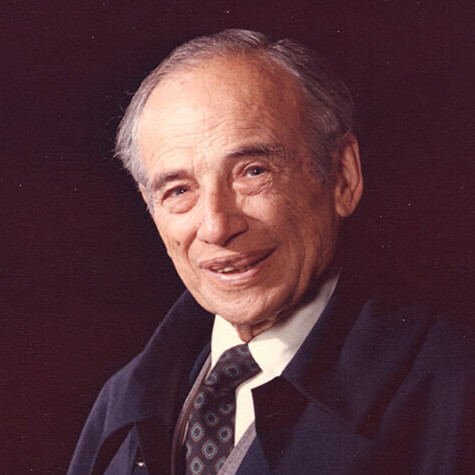
A rare smiling photo of Benjamin Graham.
“I put the plan aside during the ensuing boom years; I was too busy making money on Wall Street.” (These years, by the way, were marked by unusual stability in the price index.)”
The Great Depression Plunged America into Economic Misery

Much of Central Park became Hooverville, a shanty town for the newly impoverished (named for President Herbert Hoover, in office during the market crash and widely blamed for it) — pictured above, 1933. Photo by Bettmann/Getty Images, courtesy of allthatsinteresting.com.
In 1932, ten years after Ben dreamed of enacting his Commodity Reserve Currency Plan to stabilize the economy, he found himself “in the midst of the greatest depression in our history.” One result was an outpouring of proposals to remedy the dire economic situation. Benjamin Graham joined a New York City group called the “The Economic Forum” at the New School for Social Research.
“Our purpose was to exchange ideas about how to improve ‘the sorry scheme of things’—a phrase from the Rubaiyat that became our designation for the current economic mess. At one of the sessions, in 1932, I presented my plan, in mimeographed form.”
Ben Graham injected a humorous riff into the mix—an elegant way for France to repay its war debt to America.

This champagne inspector wears a special mask to protect herself against accidental discharges, 1933. Photo courtesy of hushbabydoll/VIA reddit.com.
“I proposed they do so by annually shipping 40 million bottles of wine, including champagne, and that every American citizen of voting age receive one such bottle gratis for Christmas.”
This scheme of Ben’s had neither legs nor (champagne flute) stems, but his serious proposal did. The group of which Ben was a member published a magazine called The Economic Forum in 1933. One of its editors, William Martin, would soon rise to prominence—initially by becoming the youngest president of the New York Stock Exchange.
“Little did we suspect that our Bill Martin was…to become head of the U.S. Reserve System, and thus one of the most powerful financial influences in the world.”
Ben’s First Effort to Publicize His Plan
Martin, and his fellow editor, Mead, asked Ben to submit an article. Ben called it “Stabilized Reflation.” Reflation referred to a return to from deflation to normal, while avoiding inflation. I am unable to locate a digital copy of this article.
“The article was published in the second issue of The Economic Forum in 1933. This was the first official presentation to the public of [Ben’s] Commodity Reserve Currency Plan.”
Ben Graham truly hoped that his idea might ease the terrible problems afflicting America. He was thrilled to learn that a lawyer acquaintance of his, David Podell, had put Ben’s plan forward to Podell’s classmate, President-elect Franklin D. Roosevelt. Ben surmised that “it was under serious study in Washington as part of the anti-Depression program.”
Did Ben’s Plan Inform President Franklyn D. Roosevelt Inaugural Address?
“Something in the new president’s inaugural address led me to think that he favored the commodity-reserve idea; naturally I was in seventh heaven.”
What was it, I wonder, that FDR said that gave Ben this impression? The president gave his first inaugural address on Saturday March 4, 1933. These lines jump out at me as having some bearing on Ben’s plan.
“Hand in hand with [putting people to work] we must frankly recognize the overbalance of population in our industrial centers and, by engaging on a national scale in a redistribution, endeavor to provide a better use of the land…The task can be helped by definite efforts to raise the values of agricultural products.” FDR
Ben’s Commodity Reserve Currency Plan did entail raising the value of agricultural products—including cotton, corn, and wheat—in the “market basket” of commodities that would become as equally valuable as gold.
“There must be a strict supervision of all banking and credits and investments; there must be an end to speculation with other people’s money, and there must be provision for an adequate but sound currency.” FDR
A fundamental pillar of Ben’s plan consisted of making the America’s currency stable and sound. I may have missed it, but I don’t find any specific reference to Ben’s ideas.
Ben Graham, American Hero?
Ben admits, in his Memoirs, that he dreamed big.
“I envisaged myself as the famous and honored savior of America’s economy and perhaps of the world’s. But nothing came of it.”
Two years later, an influential member of the Department of Agriculture, Louis Bean, invited Ben to Washington to meet with Secretary Wallace. Ben called the meeting “fruitless.”
In 1936–37, Ben wrote and published a full-length book about his plan, titled Storage and Stability, available today in a reissued edition published in 1997. The first edition is pictured atop this post, courtesy of Raptis Rare Books.
“I lavished much labor on the book.”
Benjamin Graham believed he’d made an important contribution to future economic stability and endeavored to put his ideas on the subject, with supportive data and calculations on price variations, into writing. Just as he was correcting galley proofs for the book, the eminent financier Bernard Baruch invited him to his home “to talk over the idea.”
“Our talk went very well. Baruch said he was sure that this was the solution the economy had been waiting for. He would like to associate himself with it, and present it to President Roosevelt as soon as possible.”
Baruch did discuss Ben’s plan with the president, but apparently, FDR felt that he had already introduced many new economic measures and that the American people weren’t ready for another one as radical as this. Ben faced disappointment once again.
A Favorable Review Leads to Friendship
Ben didn’t garner the attention he hoped for from The New York Times Book Review, but did receive an “enthusiastic” review from the prestigious The American Economic Review. The reviewer, economist Frank Graham, was not a relative but became a friend. Frank Graham subsequently advocated for the plan in his writings and invested in the Graham-Newman Corporation. When Frank Graham invited Ben Graham to present his idea at Princeton, Frank welcomed Ben for an overnight stay at his home. The friendship ultimately benefited Frank’s widow.
“Some years later, Mrs. Frank Graham wrote me a charming letter from Europe, telling me how indebted she was to us for her financial independence and her ability to spend the rest of her life as she pleased.”
I sense that my grandfather derived some fulfillment from helping his client-investors reach financial independence, as she did. But his efforts to publicize his Commodity Reserve Currency Plan, both in Storage and Stability (1937), and in World Commodities and World Currencies (published (1944), reveal his yearning to help multitudes. He hoped his ideas would sustain a healthy economy for the benefit of all—not just Americans, but people around the world. That vision was never realized.
Would Ben Graham’s Plan Have Worked?
I’m not qualified to answer that question.
So I asked my favorite authority on Benjamin Graham: Jason Zweig, financial columnist for The Wall Street Journal and commentator of the latest editions of The Intelligent Investor. Specifically, I queried: Might Ben’s Commodity Reserve Currency Plan have prevented or mitigated the Great Depression of the 1930s had it been enacted in 1922 after Ben first formulated it? Or, if it had been adopted in 1933 or later, when Ben’s plan was brought to the attention of FDR’s administration?
Jason Zweig replied with lightning speed.
“I don’t know; I am the wrong person to ask. I do not know enough about macroeconomics or monetary policy to have an informed opinion.” Jason Zweig
Zweig went on to suggest that I seek out the opinion of economist Dr. Perry Mehrling, mentioning his 2007 article, which Dr. Mehrling later published in 2011. I did, and was pleased to receive Dr. Mehrling’s answer.
“You ask if the proposal would have worked. My own thinking about these matters, specifically international money, has been evolving since I wrote that [article.]”
If I understand him correctly, Dr. Merhling has continued to scrutinize Ben’s plan, even after he published the revised 2011 article on the subject. In his first email, he wrote a laudatory passage about my grandfather.
“Graham was a hard money guy, trying to anchor the system in gold and commodities. There is always a tension between elasticity and discipline, fluctuating over time. What I love about your grandfather is his practitioner knowledge. He was a pioneer, trying to figure stuff out before the availability of data and modern computing to analyze it.”
I appreciated his generous words; however, in a subsequent email, he expressed his doubts.
“Basically, I think Ben was trying to generalize the gold standard, by broadening the basket. But the gold standard itself was at that time already clearly not working…The idea of stabilizing commodity prices by absorbing surpluses and then dispensing those inventories in times of shortage is probably a good one. But linking all of that to currency is probably not a good idea.” Dr. Perry Mehrling
No, Dr Mehrling says, in his opinion Ben’s plan probably would not have worked. I’m grateful for Dr. Mehrling’s honest appraisal and surprisingly pleased that he’s continued to think and write about Ben Graham’s ideas in the course of his distinguished career. He tells me that his “2022 book on Kindleberger reflects that evolution.” I marvel that economists are still grappling with the plan Ben developed a century ago.
The Economic Welfare of the Society as a Whole
While reading Joe Carlen’s biography of Ben, The Einstein of Money, I came across this passage.
“Remarkably, Graham not only concerned himself with the safety of the investing public, but, as reflected in his work on the Commodity Reserve Currency Plan, he was also mindful of the overall economic welfare of the society as a whole, particularly its more vulnerable segments.” Joe Carlen
I find it moving that my grandfather yearned to be remembered, not for his enduring contributions of security analysis and value investing, but for his plan to save America—and the world—from future depressions. Just as he wanted to help people individually to avoid calamity and become financially secure, he wanted to help people collectively—whole nations!—to avoid calamity and achieve financial security.
Ben knew financial disaster first-hand. I view his life’s work as his noble effort to give others the financial safety that Ben, the boy, longed for and never had. I know he was disappointed that his Commodity Reserve Currency Plan wasn’t adopted. I hope he derived a sense of wellbeing from providing his investment wisdom to present and future investors around the world.
The Gift of Equanimity
I’m touched that my grandfather’s deepest ambition was not only to lift his own family out of poverty by investing money intelligently, but also to give others the tools they need to do the same. He also wanted to stabilize the global economic order, so that as many people as possible could live free of money woes. He wanted to give others the equanimity he himself radiated—the equanimity that comes with financial security.
My grandfather’s generosity reminds me why I write this blog. I’m thankful to have this platform to express Ben’s values, the values Warren Buffett emphasized to me—kindness and generosity—along with empathy for the suffering of others and the drive to relieve that suffering —and share them with you, dear readers. No selflessness required. The Dalai Lama and myriad others including researchers at the Harvard Business School have found that serving others through altruism, and giving to others, makes us happy. May you find your own ways to give, to cultivate equanimity, and to be happy.